
About
About Philanthropy-Ready, our Founder, Dustin Perry OAM, and reference documents that inspire and inform us.
Philanthropy-Ready
The story of Philanthropy-Ready is young, in fact barely more than an idea as I sit and write the first version of it’s story.
It’s an idea based on the fact that there is such vast amounts of wealth in Australia that we describe as dormant and unproductive. Upon learning some key details about this wealth, sitting with both individuals and family organisations, and specifically the lack of consideration many of those fortunate Australians holding this wealth are giving to philanthropic/charitable giving, solutions possible solutions began to be drafted.
The big barrier, which has like a neon sign in front of our faces once we saw it, was that a clear majority of financial services professionals who advise, particularly wealthy people, on decisions that shape their financial futures either never or rarely mentioned giving at all.
Simply asking every client one question, whether they have considered or are interested in charitable giving, not talking them into it, just asking a neutral question, is predicted to directly trigger a release of $2b - $4b per year.
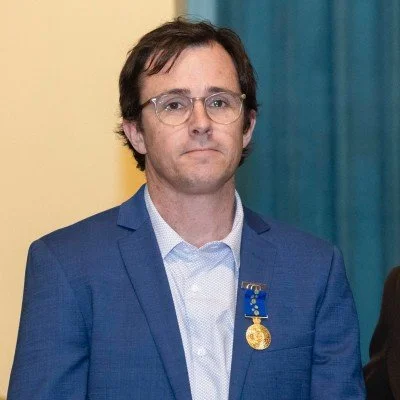
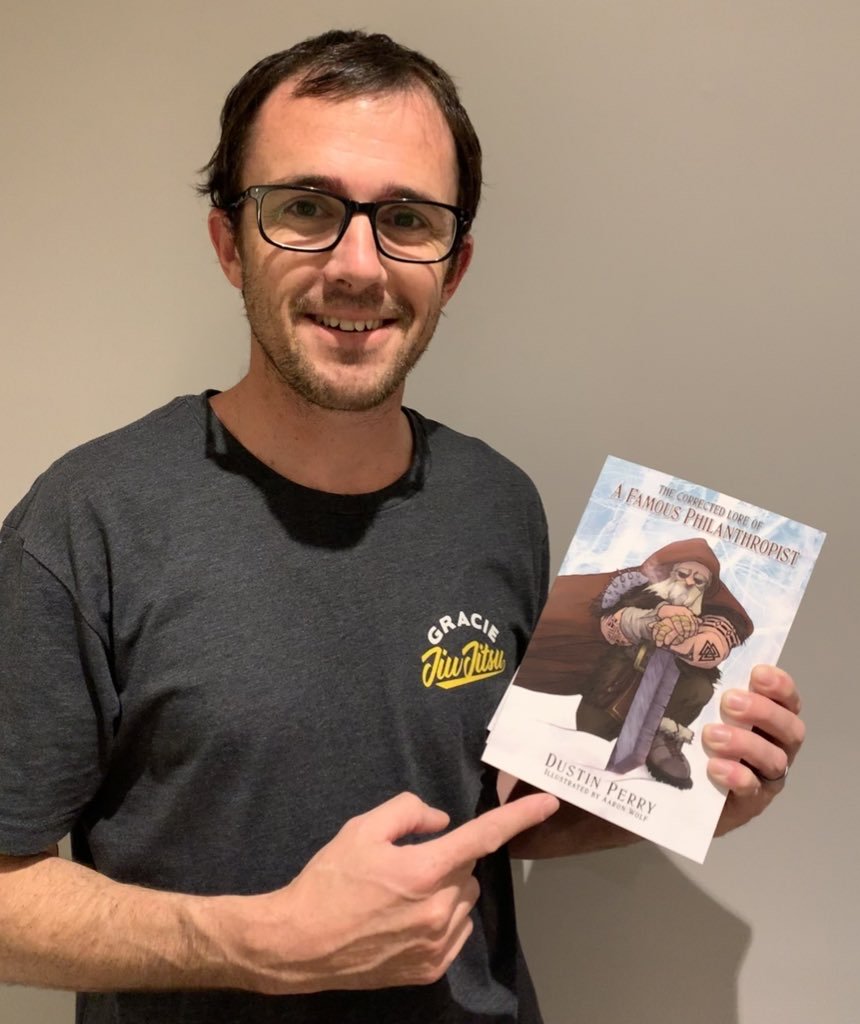
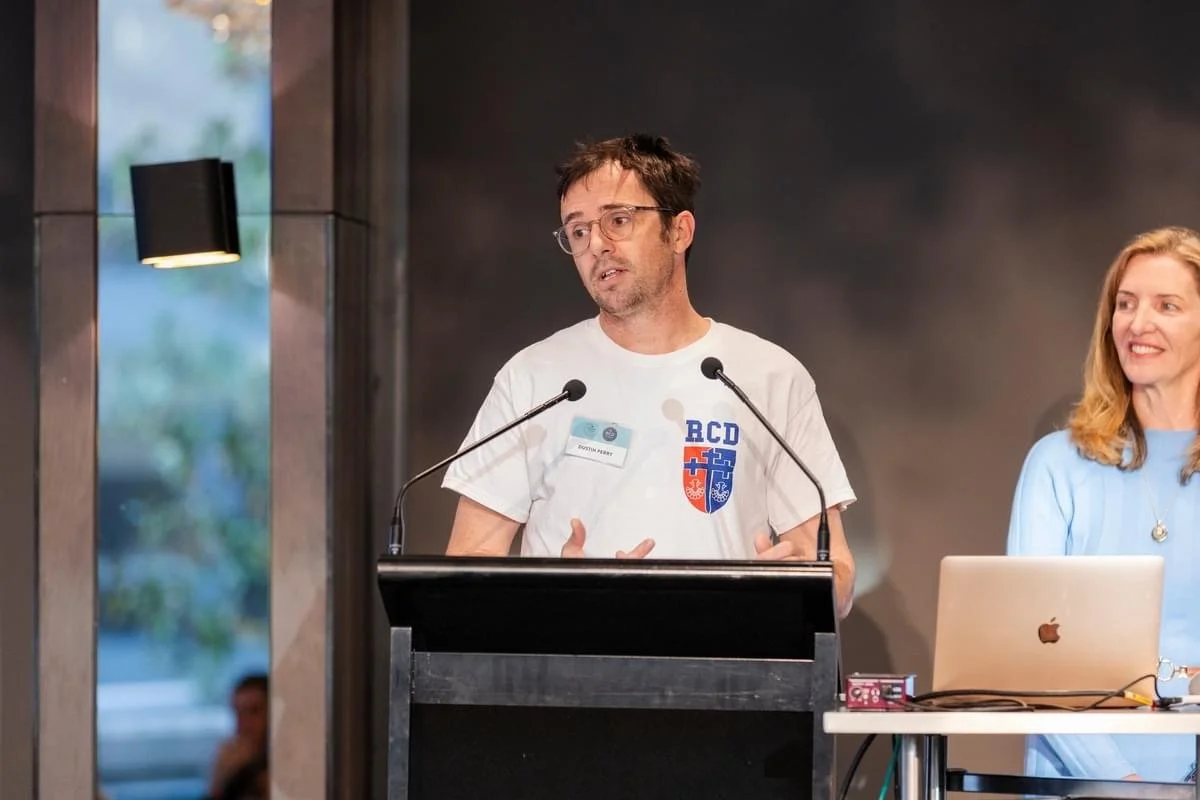
Dustin Perry OAM - Founder, Philanthropy-Ready
As a carpenter by trade, I don’t have the background many would expect from the founder of an organisation like this, and it’s therefore probably not surprising that I was introduced to the philanthropic fundraising world somewhat involuntarily.
I was working as a Project Manager for a builder when my daughter, Chloe, was diagnosed with brain cancer. After a growing list of treatments had already failed and Chloe’s oncologist explained that he didn’t know what the next move was, because there was no funding available for paediatric brain cancer clinical trails or research, the first step from construction to philanthropic fundraising was made.
Over the next several months I raised over $130 million for brain cancer research and clinical trials, created The Australian Brain Cancer Mission, significantly changed the field of brain cancer in Australia in what appears to be a long-lasting way, and left construction management behind.
As my family and I moved into life after brain cancer, I didn’t want to think about that all day, but still wanted to work in the for purpose sector. I wanted to do some good with my time, not just get paid, and I found myself working as Major Donor Manager at Orygen, Australia’s National Centre of Excellence for Youth Mental Health.
It was during this time that I started to think deeply about philanthropy, really seek to understand the thinking of the ultra wealth and those with the capacity to be philanthropic at the highest levels, I read a lot about the strategic side of it, about legacy, different models of funding, the long-term vs immediate impact dichotomy, and so much more.
If a report we published, I was reading it. Through this whole period, and still now, I’m hungry to know all that can be known about philanthropy, but not just that, also the systems that surround it, what enables it, what hinders it, what can multiply it, what speeds it up, slows it down, add value, encourages others, what can government to, and what role can I play?
That’s me from a philanthropy and professional point of view, and on the personal side, well, I’m married, I live up in Euroa, country Victoria, spend quite a bit of time in Melbourne, particularly supporting the mighty Hawks in the AFL, I practice Gracie Jiu Jitsu, in which I’m a blue belt, I do a bit of kickboxing, I run (quite a lot these days), I like to write (have one book published), and am a part time Uber driver for my teenage kids.

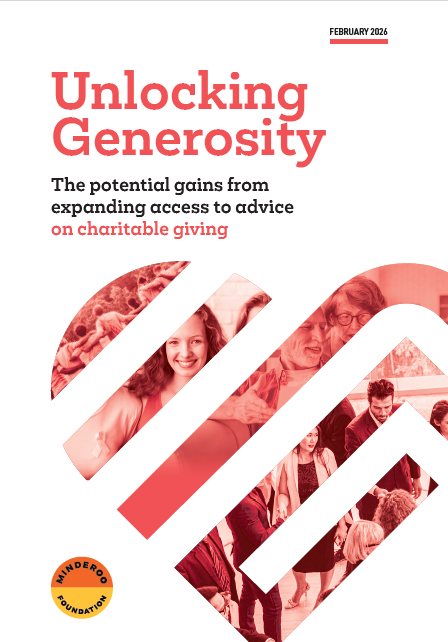
Minderoo Foundation’s Unlocking Generosity report
What is it?
Independent research by Brad Ruting Economic Consulting, co-commissioned by Minderoo Foundation and Edward Alexander Foundation.
It asks: what if every Australian who works with a financial adviser, accountant, lawyer or fundraiser could access support to give?
The headline opportunity:
$7 to $12 billion in extra donations to charity between now and 2030 could be unlocked if we equip advisers and fundraisers with the right tools.
By 2030, that means $2.4 to $4.4 billion more per year — making individual giving 34-49% higher than today vs just 14% on the current trajectory.
Where the extra giving comes from:
Bequests: $229m-$357m — more lawyers asking about charitable bequests in wills
Intergenerational inheritances: $110m-$330m — advisers talking to inheritance recipients
Large capital gains: $12m-$43m
High-net-worth individuals: $610m-$1.7b — the biggest lever
Everyday donors via tax agents: $69m-$256m
Fundraisers working alongside advisers: an additional $1.4b-$1.7b
Why it matters now:
Australia gives less than half as much as a share of GDP as NZ and the US. Only 28% of taxpayers claim a giving deduction, down from 37% in 2011. Meanwhile, over $6 trillion will transfer between generations in the next 20 years, $500bn in the next 5 alone.
Barriers: People feel they can't afford it, don't know how to structure it, or simply haven't been asked. Advisers want to help but lack confidence, tools, and clear referral pathways.
The solution the report points to — and what Philanthropy-Ready is building:
Improving access to education, training and tools for advisers
Reviewing regulatory and financial barriers (like AUM conflicts)
Further professionalising the fundraiser workforce
Improving data collection on giving
"Unlocking greater generosity from Australians who can afford to give will accelerate charities' ability to deliver benefits across the community."
The Evidence: Unlocking Generosity (2026)
That's not about pressuring clients. It's about the 30% of Australians who say they'd consider a bequest but were never asked, and the many families who value community and would appreciate the option.
Philanthropy-Ready is the practical response: a 5-pillar standard to make those conversations consistent, competent, and client-led.